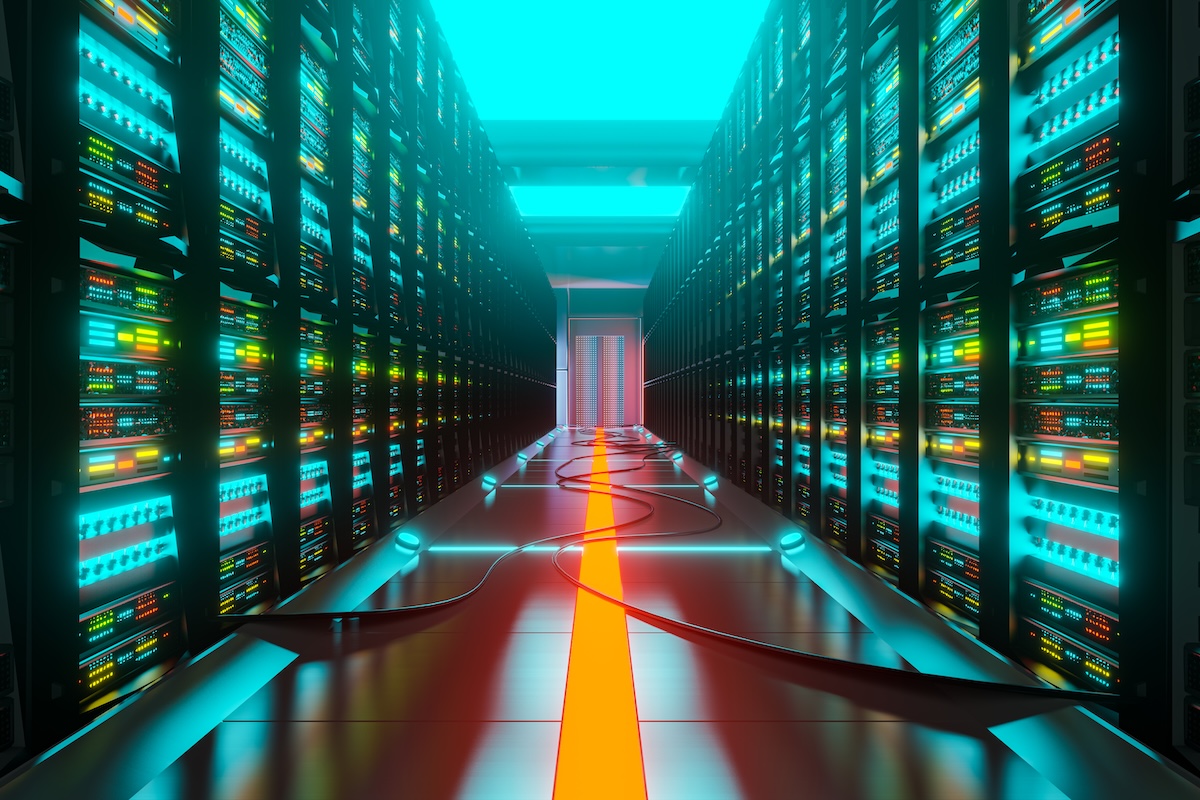
Artificial intelligence and data intelligence are rapidly changing the foundations of digital infrastructure. What was once a predictable, storage-focused environment is evolving into a high-density, compute-intensive ecosystem. At the centre of this transformation sits the data center.
As organisations deploy generative AI, real-time analytics, and autonomous decision systems, the requirements placed on data centers are increasing at an unprecedented pace. This shift is not incremental. It is structural, and it requires a fundamental rethink of how data centers are designed, powered, cooled, and operated.
The shift from storage to extreme compute
Traditional data centers were optimised for enterprise applications, databases, and virtualised workloads. AI changes this model entirely. Training and running AI models requires massive parallel processing, driven largely by GPUs and specialised accelerators.
These workloads demand significantly higher power density per rack, far exceeding the limits of legacy facilities. As a result, data centers must be designed to handle intense compute loads rather than simply housing servers and storage systems.
Power becomes the primary constraint
Power availability has emerged as the single biggest challenge for AI-driven data centers. AI workloads consume vast amounts of electricity, and demand is growing faster than grid capacity in many regions.
Operators now face challenges such as limited grid access, longer approval timelines, and increasing pressure to demonstrate energy efficiency and environmental responsibility. Securing reliable, long-term power supply is no longer a procurement issue. It is a strategic priority that determines whether a data center project can proceed at all.
Cooling requirements are fundamentally changing
The heat generated by AI infrastructure cannot be managed by traditional air-cooling systems alone. High-density compute environments require more advanced thermal management solutions.
Liquid cooling, including direct-to-chip and immersion cooling, is becoming essential rather than optional. This shift impacts facility design, operational processes, maintenance skills, and safety standards. Cooling is now a core architectural consideration, not an afterthought.
Data gravity and the rise of distributed infrastructure
AI and data intelligence thrive on proximity to data sources. As organisations process more real-time and sensitive data, latency and regulatory requirements are driving infrastructure closer to users.
This is accelerating the growth of regional and edge data centers that complement large hyperscale facilities. Industries such as banking, healthcare, transport, and smart cities increasingly rely on localised AI processing to meet performance, privacy, and compliance needs.
The result is a more distributed data center ecosystem that balances scale with proximity.
Networking becomes a performance multiplier
AI workloads generate enormous volumes of internal and inter-cluster data traffic. Without modern, high-bandwidth networking, even the most powerful compute infrastructure cannot deliver its full value.
Data centers must invest in advanced network architectures capable of supporting low-latency, high-throughput communication between GPUs, storage systems, and distributed environments. Networking is now as critical to AI performance as compute itself.
New operational skills are required
Running AI-centric data centers requires a different skill set from traditional facilities. Operators must understand GPU infrastructure, power and thermal optimisation, and AI workload behaviour.
This is driving a convergence between IT and facilities teams. The separation between digital and physical infrastructure operations is no longer sustainable. Successful data centers will be those that adopt integrated operating models and invest in specialised talent.
Sustainability becomes a business imperative
AI’s energy intensity has placed data centers under growing scrutiny from regulators, investors, and the public. Sustainability is no longer a branding exercise. It is becoming a requirement for long-term viability.
To cope with demand responsibly, data centers must improve energy efficiency, increase the use of renewable power, and design facilities with long-term environmental impact in mind. In many markets, sustainability performance will determine access to power, permits, and capital.
What needs to be done now
To meet the demands of AI and data intelligence, data center operators and policymakers must act decisively. Facilities must be designed for high-density compute from the outset. Power strategies must be secured early and aligned with future growth. Liquid cooling must be embraced as standard infrastructure. Distributed and edge models must be incorporated into long-term planning. Operational teams must be reskilled, and sustainability must be embedded into every design decision.
The road ahead
AI and data intelligence are redefining the role of the data center. No longer just a place to store and process information, the modern data center is becoming a core engine of intelligence and innovation.
Those who adapt their infrastructure and operating models to this new reality will enable the next wave of digital transformation. Those who do not will find themselves constrained by power, capacity, and outdated design assumptions in a world that is moving faster than ever.